SiC Power Module Selection Guide
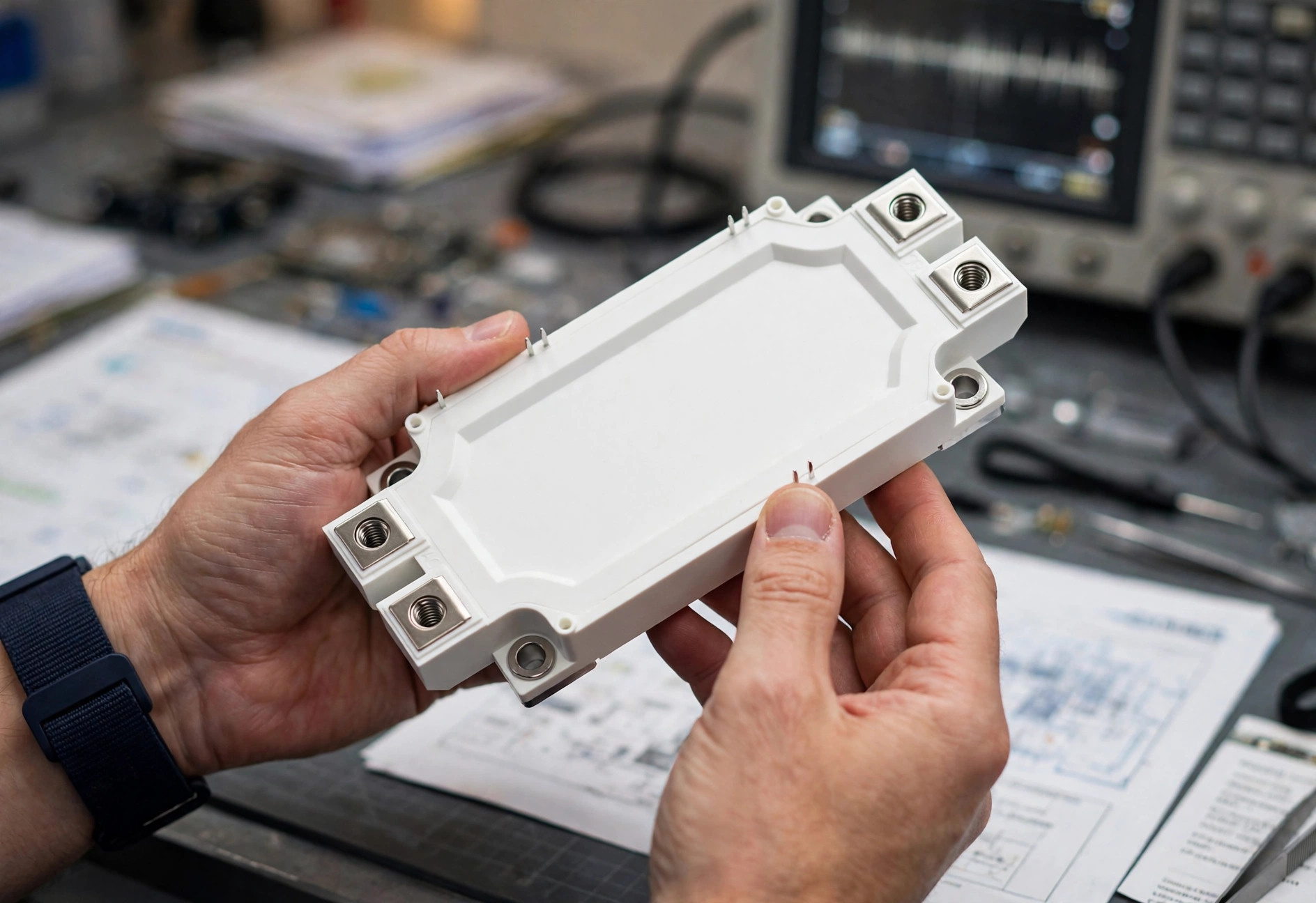
Selecting a SiC power module means matching voltage, current, package and gate drive to your application — with margin. Use the three entry points below, then follow the 5-step method to narrow down to a part number.
Which application are you designing for?
| Application | Typical DC Bus | Recommended Module Class | Priority |
|---|---|---|---|
| EV DC fast charger | 500–1000V | 1200V, 62mm / EasyPACK | Efficiency, power density |
| Solar inverter / PCS | 600–1500V | 1200V / 1700V, 62mm | Efficiency, lifetime |
| Energy storage (ESS) | 700–1500V | 1200V / 1700V, 62mm | Round-trip efficiency |
| Industrial motor drive | 380–690V AC | 1200V, 34mm / 62mm | Robustness, cost |
| UPS | 400–800V | 1200V, EasyPACK / 62mm | Reliability |
| Data-center PSU | 400V / 800V | 650V / 1200V, compact | Power density |
| Welding machine / APF | 400–800V | 1200V, 34mm / 62mm | High-frequency switching |
What blocking voltage do you need?
| Module Voltage | Typical DC Bus | Common Uses |
|---|---|---|
| 650V | ≤ 400V | Low-voltage drives, auxiliary supplies, data-center PSU |
| 750V | ≤ 500V | 800V-system auxiliaries, OBC PFC stages |
| 1200V | ≤ 900V | EV charging, solar, ESS, industrial drives — the workhorse |
| 1700V | ≤ 1300V | High-power industrial, wind, 1500V solar strings |
| 2000V | ≤ 1600V | Grid, rail, ultra-high-power converters |
Rule of thumb: keep at least 20–30% voltage margin above your maximum DC bus, including transients.
Which package fits your design?
| Package | Power Range | Footprint | Best For |
|---|---|---|---|
| 62mm half-bridge | Up to several 100A | Industry standard 62mm | EV chargers, solar, ESS — easiest second sourcing |
| 34mm half-bridge | Medium power | Industry standard 34mm | Compact drives, auxiliary power |
| EasyPACK (1B/2B) | Medium–high power | Press-fit standard | EV charging, UPS — low-inductance designs |
| HPD / high-power | 600A+ | Automotive standard | Traction inverters, direct liquid cooling |
Standard footprints (62mm, 34mm, EasyPACK) are shared across vendors — the foundation of any pin-to-pin replacement strategy. See our cross-reference library.
How do you select a SiC module in 5 steps?
- Fix the voltage class. From your DC bus plus derating margin, choose 650V / 1200V / 1700V. When in doubt, 1200V covers most industrial designs.
- Size the current. Calculate RMS current at worst-case load plus overload; pick a module whose continuous rating covers it at your heatsink temperature, not just at 25°C.
- Set the switching frequency. Higher frequency shrinks magnetics but raises switching losses — estimate Eon/Eoff losses from the datasheet and check total losses against your thermal budget.
- Choose the package. Match power level and mechanical constraints; prefer industry-standard footprints (62mm, EasyPACK) to keep second-source options open.
- Verify gate drive and qualification. Confirm the driver's voltage window, isolation and protection features fit the module; for automotive, require AEC-Q101/AQG-324 grade parts.
For the full methodology with worked examples, read SiC Power Module Selection Guide: 5 Steps for Engineers.
Still choosing? Talk to an engineer.
Send your bus voltage, power level and application — we'll recommend the right module and arrange samples.
Request Samples